



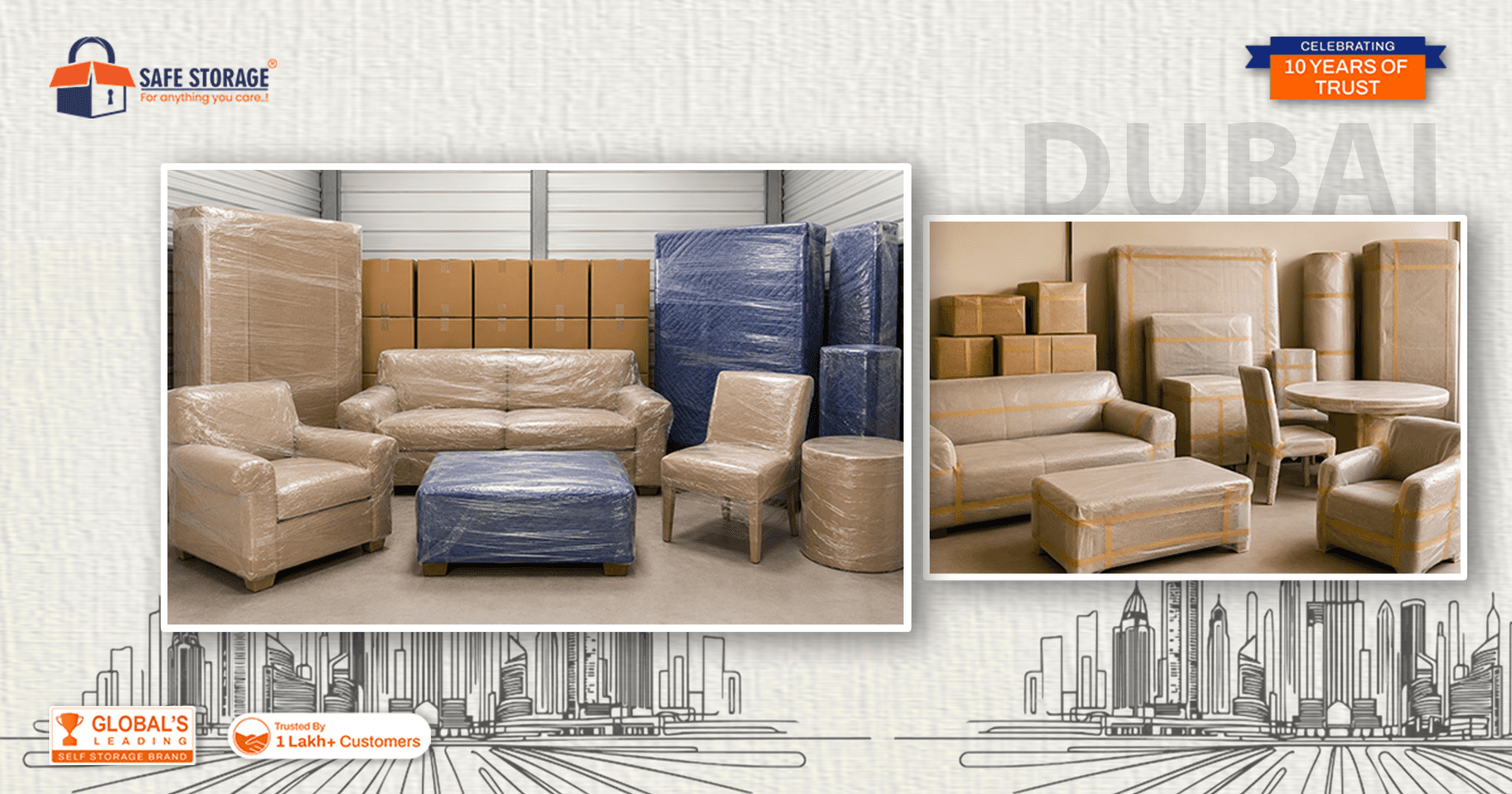
Furniture that is able to survive many years in storage in Europe will not last more than one summer in Dubai if incorrectly packed. The effect of heat, humidity, desert dust, and extended storage period makes the packing process the most important aspect when ensuring your sofa, table, or wardrobe comes out exactly as it was put in.
This guide walks through how to prepare and pack every major furniture type for long-term storage in Dubai, the materials to use, the mistakes that cause the most damage, and when it makes sense to let a professional storage company handle the wrapping for you.
Why Dubai's Climate Is So Hard on Stored Furniture
There are three different factors at play when furniture storage in Dubai. The first one is heat; when packed in an uncooled garage or simple storage unit, summer temperature rises well above what the glue, varnish and finish were meant to cope with, causing joints to loosen, veneer to peel off and leather to dry up and crack.
The second, and less noticeable factor is humidity, especially on the coast, which causes swelling in solid wood, corrosion in metal fittings, and mold growth in fabrics, foam and leather.
Packing exists to defend against all three, and a climate-controlled storage unit held at a stable twenty to twenty-five degrees with regulated humidity, as every SafeStorage unit removes most of the risk before packing even begins.
Packing Materials Worth Using
Furniture packing in Dubai calls for breathable material, rather than an airtight covering. Make sure you have furniture blankets, breathable cotton covers for sofas and mattresses, acid-free paper for fragile surfaces, bubble wrap only for glass and hard surfaces, stretch film for bundling not in direct contact with cloth or leather pieces, double-walled boxes, silica gel packs to take care of extra humidity, and markers and tapes for labeling.
And the material to avoid is the sealed plastic sheeting over upholstery, leather, or wood, as it will create a compost from your furniture in such a humid environment. This particular recommendation should be followed at all costs in any packing situation in Dubai. [Get Free Quotation]
How to Pack Each Type of Furniture
Each type of furniture is going to react differently to storage and, thus, requires a certain set of precautions. Let’s discuss each applicable section separately.
-
Wooden Furniture
Cleaning every surface with a wood-safe cleaner and letting it dry completely traps moisture, which is the enemy of long-term storage. Apply a coat of furniture wax or polish to seal the grain against humidity swings.
Take apart everything that can be: unscrew table legs, unfix headboards from bed frames, and unpack shelves from cabinets, placing screws and other components in clearly marked zip lock bags attached to the bottom surface of the biggest component.
Wrap fully in furniture blankets secured with stretch film over the blanket, never against the wood, and store everything flat rather than leaning, which warps panels over months.
-
Sofas & Upholstered Furniture
Proper cleaning of these pieces of furniture should be done by thoroughly vacuuming under and between the seats, followed by applying an upholstery cleaner on the fabric, and allowing it to dry for one whole day. The cushions must be taken off the sofas and packed into breathable boxes or cotton bags. [Get Free Quotation]
Wrap the frame in a cotton cover first, then a furniture blanket for impact protection. Sofas should always be stored on their feet in their natural position. Storing a sofa on its end for months distorts the frame and the padding.
-
Leather Furniture
Leather items suffer the most in Dubai conditions, due to heat drying leather and humid weather facilitating mildew development. Clean the leather with a special leather cleaner, apply lots of conditioner and let it soak in, then wrap the item.
Use only breathable cotton covers; leather wrapped in plastic will sweat, stain, and crack. If the storage period will run beyond a few months, plan to have pieces reconditioned on return, and insist on a genuinely climate-controlled unit rather than an ordinary garage.
-
Mattresses & Bedding
Vacuum both sides, deodorise with baking soda, and let the mattress air for several hours. Slide it into a breathable fabric mattress bag not sealed plastic and store it flat. A mattress stored on its side for a long period lets the internal fillings migrate downwards, leaving it lumpy and unsupportive. [Get Free Quotation]
-
Glass, Marble & Mirrors
Tape a large X across glass panels to hold fragments in the unlikely event of a break, then wrap in acid-free paper, followed by bubble wrap and a final blanket layer.
Glass and marble table surfaces must always be stored vertically, not horizontally, so it would be best if they were placed between the boards. Every single package should be marked as fragile from all sides so that nothing can be put on top of them.
-
Appliances & Electronics
Fridges, washers, and dishwashers should be thoroughly drained, dried, and left to air out for one or two days before storing and should be stored with doors cracked open to avoid mold growth and foul smell.
Electronics must be placed in original packing if available or double-layered cardboard boxes lined with paper with wires organized, tagged, and packed away. [Here More Information]
Before Anything Leaves the House: A Simple Routine
Whatever the furniture type, the same preparation routine applies. Everything goes in clean and bone-dry, because dirt attracts pests and moisture starts mould. Disassemble what you can, keep hardware bagged and taped to its parent piece, and photograph each item from a couple of angles both for reassembly and as a condition record for insurance.
Label every wrapped bundle and box on multiple sides with the contents and the room it came from. This is exactly the discipline professional crews follow, and it is the difference between an organised storage unit and an expensive guessing game a year later.
Loading the Storage Unit for the Long Term
How furniture is positioned in the unit becomes just as important as the way it is packed. Nothing should be placed directly on the ground in the unit; rather, furniture must be placed on pallets or wooden boards for proper circulation of air, while maintaining a distance of one hand's length from the furniture and the walls.
In addition, a small passage should be maintained down the center of the unit to ensure accessibility to the back. In a professionally managed storage facility in Dubai this arrangement is handled for you, with each item catalogued into a digital inventory so a single chair or box can be retrieved without disturbing the rest.
Skip the Packing Entirely: Professional Packing & Storage
Packing a full home correctly takes materials, muscle, and the better part of a weekend, which is why most SafeStorage customers simply let the crew do it.
The service is end-to-end: trained packers arrive at your door with all materials, wrap and photograph every piece, transport it to a secure storage facility with round-the-clock CCTV and biometric access, and deliver everything back fully or item by item whenever you ask.
For long-term furniture storage in particular, professional wrapping plus genuine climate control is the closest thing to a guarantee that your furniture comes back exactly as it left.
About the Author
Sarah Johnson covers packing, moving, and home storage topics for the SafeStorage Dubai blog. Her guides draw on the day-to-day practices of SafeStorage's professional packing crews, who prepare thousands of Dubai homes for storage every year.
What Our Customers Say
“I stored my entire villa furniture for 6 months during renovation. Everything came back in perfect condition thanks to the climate control. The pickup and delivery service was a lifesaver!” — Ahmed Hassan, Villa Owner, Dubai
Frequently Asked Questions
1. Should I wrap furniture in plastic for long-term storage in Dubai?
No, not right away. Plastics trap moisture inside to attack wood, textiles, and leather with condensation, mould, and staining. Use natural cotton covers and furniture blankets, with only stretch film on top of the cotton cover or hard surfaces.
2. Do I really need climate-controlled storage for furniture in Dubai?
Definitely for everything being kept in storage beyond a few weeks. The hot and humid weather in Dubai ruins furniture joints, leather, foam, and electronic items in normal warehouses. A climate-controlled storage unit keeps the same temperature and humidity inside during all seasons; that’s why it is incorporated into every SafeStorage unit.
3. How do I prepare a sofa for storage?
Vacuum everything completely, wash fabrics and allow them to dry for one whole day, pack each cushion separately in breathable packaging, and then put the frame in a cotton cover and furniture blanket. Store sofas upright on all legs.
4. Can I store a mattress long-term without ruining it?
Absolutely, but only when packed flat inside a breathable bag following the cleaning and airing process. The reason why mattresses stored on their side develop lumps is the displacement of the filling and mould developing inside plastic bags.
5. How should wooden furniture be protected from humidity?
Wood must be well protected through covering the furniture with wax or polish, using blankets instead of plastic sheets to cover the furniture and keeping it horizontal in a climate-controlled room.
6. Is it safe to store electronics and appliances?
Yes, but only with prior arrangements. Appliances need to be drained and dried, opened and stored with the doors ajar. Electronics must be placed in padded boxes with silica gel and labeled cables. Climate control is required since temperature and moisture are two major reasons for failures in electronics. [Here More Information]
7. Do I have to pack everything myself?
No. SafeStorage includes professional packing with every plan. The crew arrives with all materials, wraps and photographs each item at your door, and handles the transport. Most customers find this safer and faster than self-packing.
8. How much does furniture storage cost in Dubai?
The starting priceDeposit or hidden fees not required.
9. Is my furniture insured while in storage?
Yes, free insurance cover is included on every SafeStorage plan, and enhanced cover is available for antiques, art, and other high-value pieces. Photographing items at pickup creates a condition record that makes any claim straightforward.
10. How long can furniture stay in storage?
As long as you need, from a few weeks during a renovation to several years while abroad. Storage runs month to month with no lock-in, so the plan simply continues until you schedule delivery back. [Here More Information]
11. Can I get one piece of furniture back without emptying the unit?
Sure. Each item is being photographed and added to the digital inventory at the moment of collection, so you can ask us to deliver you one chair, package, or appliance and keep everything else in storage.
12. What items cannot go into a storage unit?
Storage in Dubai does not accept storage of any food items, plants, flammable materials, gas tanks or illegal items. If in doubt, the SafeStorage team will help to determine whether it is possible to store a specific item.
Final Thoughts
In order for long-term storage of your furniture in Dubai to be successful, it is necessary to take into account only two factors: breathing and methodological packing and climate-controlled conditions.
Get both right and a dining set or leather sofa will emerge after two years looking exactly as it did on collection day; get either wrong and the city's heat, humidity, and dust will quietly do their work.
If you would rather not gamble a home's worth of furniture on a weekend of DIY wrapping, let professionals handle it. End-to-end packing, pickup, climate-controlled storage, and delivery back are all included in one transparent plan.
Get a free quote in two minutes at safestorage.ae, or call +971 50 577 3388 to book a pickup. [Here More Information]